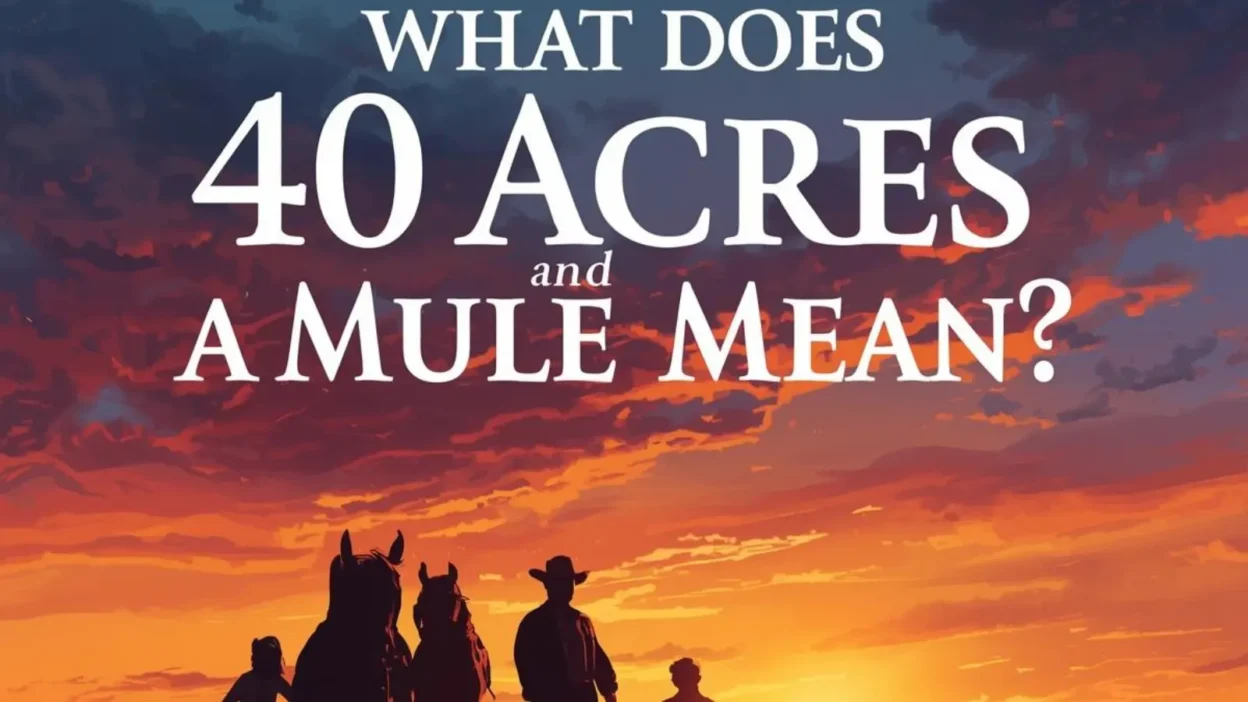
In recent years, the phrase “40 acres and a mule” has been trending online, sparking curiosity among young audiences, history enthusiasts, and social media users alike.
People are searching for its meaning not only to understand history but also to grasp its modern cultural references.
“40 acres and a mule” refers to a promise made to formerly enslaved African Americans in the United States after the Civil War, symbolizing reparations and economic opportunity.
The phrase has evolved to appear in texting, social media, and casual conversations, often with symbolic or humorous undertones.
⚡ Quick Answer
“40 acres and a mule” originally represents a post-Civil War promise to provide freed slaves with land and a mule to start their new lives. Today, it’s often used metaphorically to discuss reparations, justice, or small compensations for past wrongs.
📚 Meaning in Different Contexts
In Texting and Messaging
In casual texting, “40 acres and a mule” can be used metaphorically to talk about compensation, reward, or a promised benefit. For example:
- “After all this overtime, I deserve my 40 acres and a mule!”
Here, the phrase is humorous, implying the sender deserves something significant for their effort.
In Love and Relationships
While not commonly used in romantic contexts, some may playfully use it to talk about giving or receiving something valuable in a relationship. For instance:
- “If you bring me coffee every day, I might just grant you 40 acres and a mule.”
It becomes a fun, exaggerated way to show appreciation or promise.
In Slang and Casual Language
In slang, it often conveys the idea of entitlement or expectation. People may use it when discussing fairness or their “due reward”:
- “I helped you move last weekend, now where’s my 40 acres and a mule?”
It’s casual, humorous, and widely understood in informal conversations.
On Social Media Platforms
On platforms like TikTok, Instagram, or Snapchat, “40 acres and a mule” is often used in memes, captions, or viral trends to highlight historical injustice, humor, or ironic situations. Example captions:
- “Waiting for my 40 acres and a mule like…” (accompanied by a funny GIF)
- “When your landlord says rent is due… where’s my 40 acres and a mule?”
Spiritual or Symbolic Meaning
Symbolically, “40 acres and a mule” represents freedom, opportunity, and justice. For some, it’s a reminder of unfulfilled promises and a call for reparative action in society.
Numerology or Cultural Meaning
Culturally, the number 40 has historically represented trials, transformation, or important periods in many traditions. Here, paired with a mule (symbolizing hard work and reliability), the phrase conveys effort, reward, and the hope of independence.
🧠 Examples & Usage
Real-Life Example
- “After graduating, I thought my first paycheck would be my 40 acres and a mule, but rent came first.”
This usage shows a metaphorical application of the phrase in everyday life.
Sample Texts
- Texting friend: “Help me with this project and I’ll owe you 40 acres and a mule 😅”
- Instagram Caption: “Manifesting my 40 acres and a mule in 2026 💪🏾✨”
How Context Changes Meaning
- Historical context: Literal promise to freed slaves
- Social media context: Meme, joke, or expression of entitlement
- Texting context: Reward or compensation metaphor
❓ Common Questions
What Does “40 Acres and a Mule” Really Mean?
It originally refers to a post-Civil War promise to formerly enslaved African Americans, offering land and a mule to start their new life.
Is “40 Acres and a Mule” Positive or Negative?
It can be both: positive as a symbol of opportunity, negative when referencing broken promises.
Is “40 Acres and a Mule” Romantic?
Rarely. It is mostly metaphorical or humorous, not romantic.
How Should Someone Reply to “40 Acres and a Mule”?
Context matters. In a humorous message, reply with witty agreement or sarcasm:
- “Only if I get the house too!”
- “Send it via FedEx 😆”
🏁 Conclusion
In simple terms, “40 acres and a mule” is a phrase rooted in history, representing freedom, compensation, and justice for formerly enslaved African Americans.
Today, it is used metaphorically in texting, social media, and casual conversation to express entitlement, reward, or humor.
Understanding its origin and modern usage gives you the full picture of its significance in culture and language.


