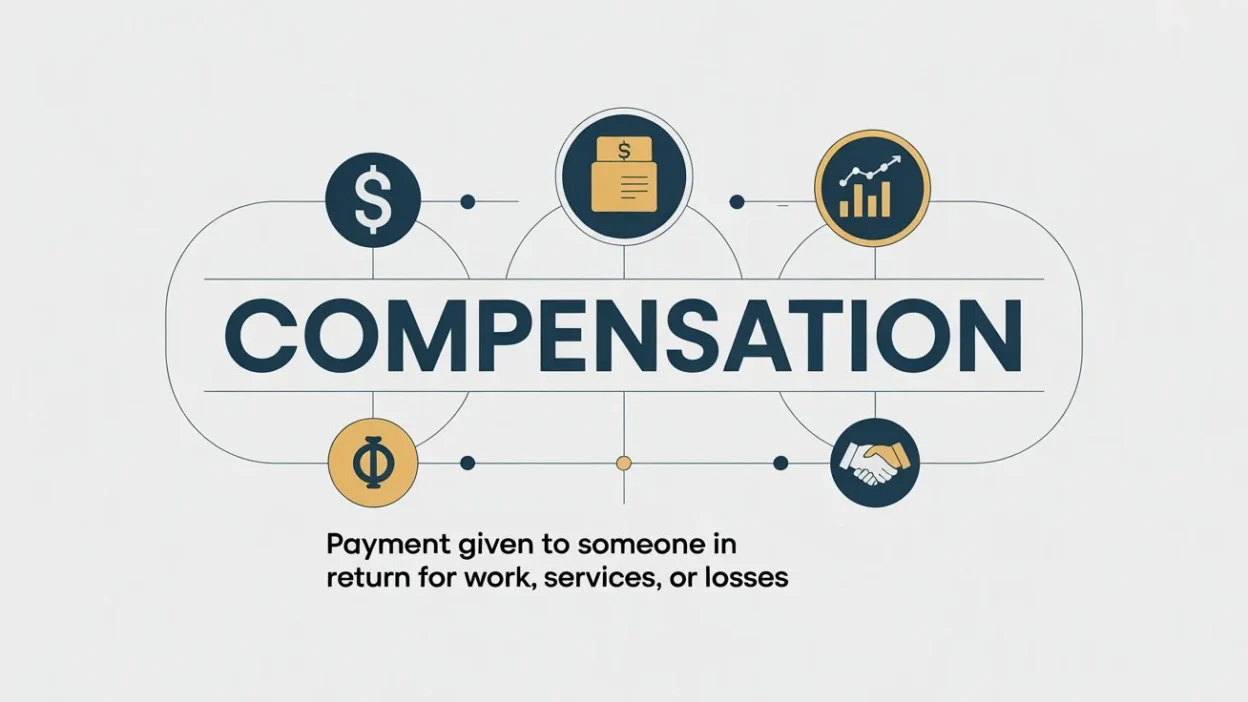
In today’s world, people are constantly searching for the meaning of “compensation”.
Whether you’ve seen it in a text message, on social media, or at work, understanding the term is important because it can have multiple meanings depending on the context.
Compensation generally refers to something given to make up for a loss, service, or effort.
This article will break down its meaning in simple terms, explain its use in different contexts, and provide real-life examples.
⚡ Quick Answer
Compensation means giving something—usually money, benefits, or a favor—to make up for a loss, work, or effort. It can also refer to balancing or adjusting for something in casual or symbolic contexts.
📚 Meaning of Compensation in Different Contexts
In Texting and Messaging
In texting, compensation is rarely used in its formal sense. People might use it jokingly or sarcastically to refer to someone making up for a mistake or a shortcoming.
Example:
- “He forgot my birthday, but he bought me dinner as compensation.”
Here, it means making amends for forgetting an important event.
In Love and Relationships
In romantic contexts, compensation often involves actions to balance or make up for a perceived fault or neglect. It can be positive if used to show care, but it might also indicate an attempt to cover up mistakes.
Example:
- “She gave him extra attention as compensation for missing their date.”
In Slang and Casual Language
Casually, compensation might be used humorously to talk about making up for shortcomings or weaknesses. Sometimes, it’s used in playful teasing among friends.
Example:
- “Buying a fancy car is just compensation for his tiny apartment.”
On Social Media Platforms (TikTok, Instagram, Snapchat, etc.)
On social media, compensation can appear in memes, captions, or posts to highlight balance or overcompensation in lifestyle or behavior. It’s often used with humor or irony.
Example Caption:
- “Bought three pairs of shoes this week… compensation for eating too much pizza 🍕😅”
Spiritual or Symbolic Meaning
In spiritual or symbolic contexts, compensation can represent balance or the universe making up for past hardships. Some believe acts of kindness or generosity serve as compensation for negative energy.
Example:
- “Volunteering at the shelter was her way of seeking compensation for past mistakes.”
Numerology or Cultural Meaning
While compensation doesn’t have a direct numerology meaning, culturally, it often reflects fairness, justice, or reciprocity. Many traditions emphasize the importance of giving back or restoring balance when something is lost.
Example:
- In some cultures, offering gifts or money as compensation after a mistake or accident is seen as honorable.
🧠 Examples & Usage
Here are some real-life examples showing how compensation changes meaning based on context:
| Context | Example | Meaning |
| Texting | “Here’s a coffee as compensation for being late.” | Making up for a minor mistake |
| Romantic | “He planned a surprise trip as compensation for arguing.” | Apology or balancing relationship issues |
| Casual/Slang | “That expensive gadget is compensation for his stress.” | Humorously making up for personal flaws |
| Social Media | “Bought five snacks as compensation for a long study session.” | Playful balance of effort and reward |
Tip: Always consider context—compensation can be serious, humorous, or symbolic depending on the situation.
❓ Common Questions About Compensation
1. What does compensation really mean?
It means giving something to make up for a loss, effort, or mistake, often in money, gifts, or actions.
2. Is compensation positive or negative?
It can be both. Positive when it shows fairness or care, negative if it’s just an attempt to cover up a mistake.
3. Is compensation romantic?
Sometimes. In relationships, it often shows care or an effort to restore balance.
4. How should someone reply to compensation?
A simple “thank you” or acknowledgment is usually enough. The response depends on whether it’s serious or casual.
🏁 Conclusion
In simple words, compensation is about making up for a loss, mistake, or effort.
It can be financial, emotional, or symbolic, depending on context.
Now you can confidently understand and use compensation whether it appears in texts, relationships, casual speech, or even social media.

“Ava’s style is poetic and elegant, making her anniversary captions truly memorable.”


