In today’s world of constant storytelling, online chats, and social media trends, the term “fiction” keeps popping up everywhere.
People are curious about its meaning because it appears in texts, captions, and even casual conversations.
Understanding what fiction means can help you grasp conversations better, enjoy stories fully, and even use it correctly in your writing.
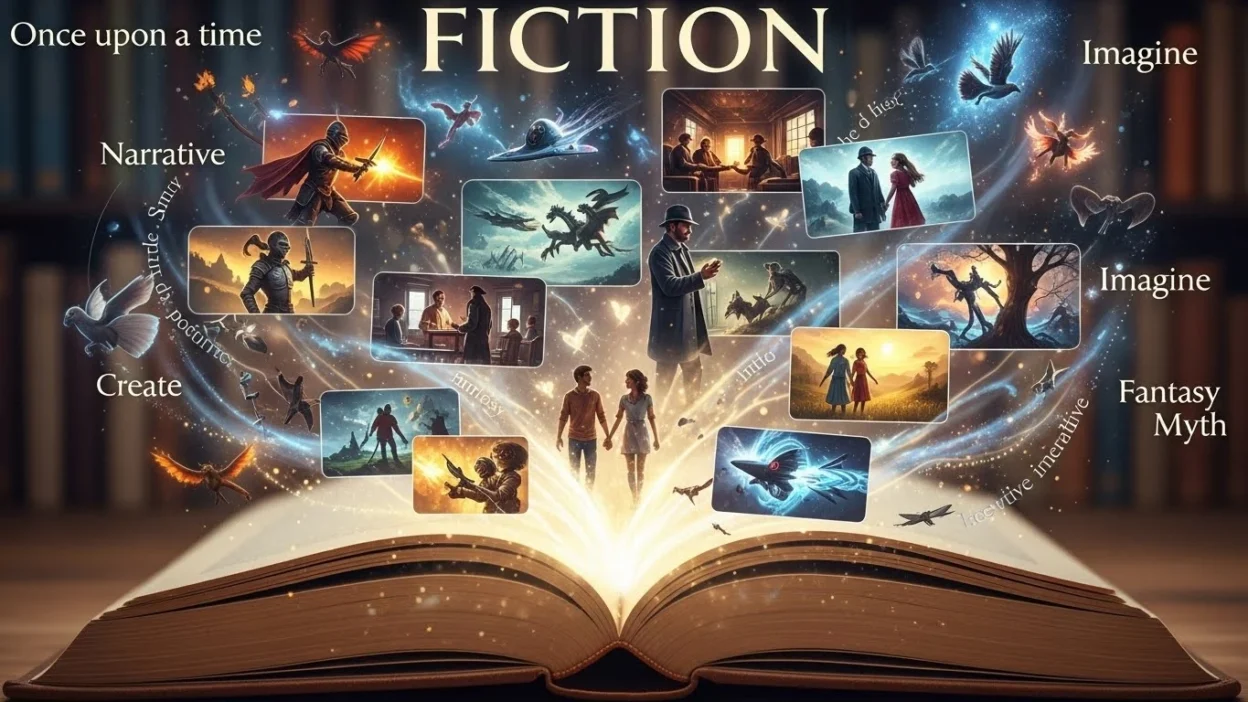
Fiction is essentially something that is imagined or made up, not necessarily real. It refers to stories, ideas, or events created from imagination rather than actual facts.
⚡ Quick Answer
Fiction means a story, idea, or statement that is invented and not real. It can appear in books, messages, social media, or casual conversations when someone wants to describe something imaginary or exaggerated.
📚 Meaning of Fiction in Different Contexts
In Texting and Messaging
In texting, fiction is often used to describe exaggeration or something made up. For example, if someone says:
“He said he caught a shark with his bare hands 😂”
You might reply:
“Sounds like pure fiction!”
Here, fiction highlights that the story is unlikely to be true or is entirely imagined.
In Love and Relationships
In romantic contexts, fiction can describe situations that feel idealized or unrealistic. For example:
- Someone might say: “Our first date felt like fiction.”
This usually means the date was magical or perfect, almost too good to be real. Fiction in love can convey both romantic fantasy or a dream-like scenario.
In Slang and Casual Language
Among young people, fiction can sometimes mean:
- Fake stories: “Stop giving me fiction” → Stop lying.
- Exaggeration: “That outfit is fiction!” → That outfit looks unreal or amazing.
Here, fiction is used playfully to call out something unbelievable.
On Social Media Platforms (TikTok, Instagram, Snapchat)
Social media users often use fiction in captions, memes, or comments to describe something dramatic, unrealistic, or exaggerated:
- TikTok: “My weekend plans? Pure fiction 🫠”
- Instagram: “Her glow-up is fiction!”
- Snapchat: “This story is fiction, don’t believe it.”
It’s trendy because it quickly communicates drama or fantasy in a fun, relatable way.
Spiritual or Symbolic Meaning
In some spiritual contexts, fiction can symbolize:
- Illusions or imagined fears
- Creative storytelling of personal journeys
- Perception vs reality
People might say your worries are “fiction” to imply they exist only in your mind and not in reality.
Numerology or Cultural Meaning
While fiction doesn’t have a standard numerology meaning, in cultural storytelling, fiction represents:
- Creativity and imagination
- Freedom to explore possibilities
- The human love for stories
It shows how humans naturally enjoy exploring what could be, not just what is.
🧠 Examples & Usage
Here are some real-life examples to see how fiction changes with context:
| Context | Example Sentence | Meaning |
| Texting | “Bro, that story is fiction 😆” | The story is exaggerated or fake |
| Romance | “Our love story is fiction, just like a fairytale” | Romantic, magical, almost unreal |
| Social Media | “Her glow-up? Total fiction” | Unrealistic or impressive transformation |
| Spiritual | “Your fear is fiction” | Imagined, not real |
Notice how the tone and situation shift the meaning from fun to romantic to metaphorical.
❓ Common Questions About Fiction
Q1: What does fiction really mean?
A: Fiction is anything that is made up or imagined, not based entirely on real events.
Q2: Is fiction positive or negative?
A: It depends on context. Fiction can be playful, romantic, or even critical when calling out lies.
Q3: Is fiction romantic?
A: Sometimes! In love, fiction can describe dreamy or perfect moments.
Q4: How should someone reply to fiction in chat?
A: You can reply with:
- “Haha, sounds fake 😂”
- “Total fiction 😏”
- Or just play along creatively, depending on the tone.
🏁 Conclusion
In simple terms, fiction means anything created from imagination rather than reality.
From texting to love stories, social media trends, and spiritual meanings, the word is versatile and widely used.
Next time someone calls a story or situation “fiction,” you’ll know exactly whether they mean it’s fun, romantic, exaggerated, or imaginary.
Understanding fiction makes you sharper in conversations and helps you enjoy stories—real or imagined—without confusion.
Now, you fully understand the term and its modern uses!