In today’s financial world, the term “gross income” is becoming increasingly popular as more people seek to understand their earnings, taxes, and overall financial health.
Whether you’re preparing for a job, filing taxes, or simply tracking your personal finances, knowing what gross income means is essential.
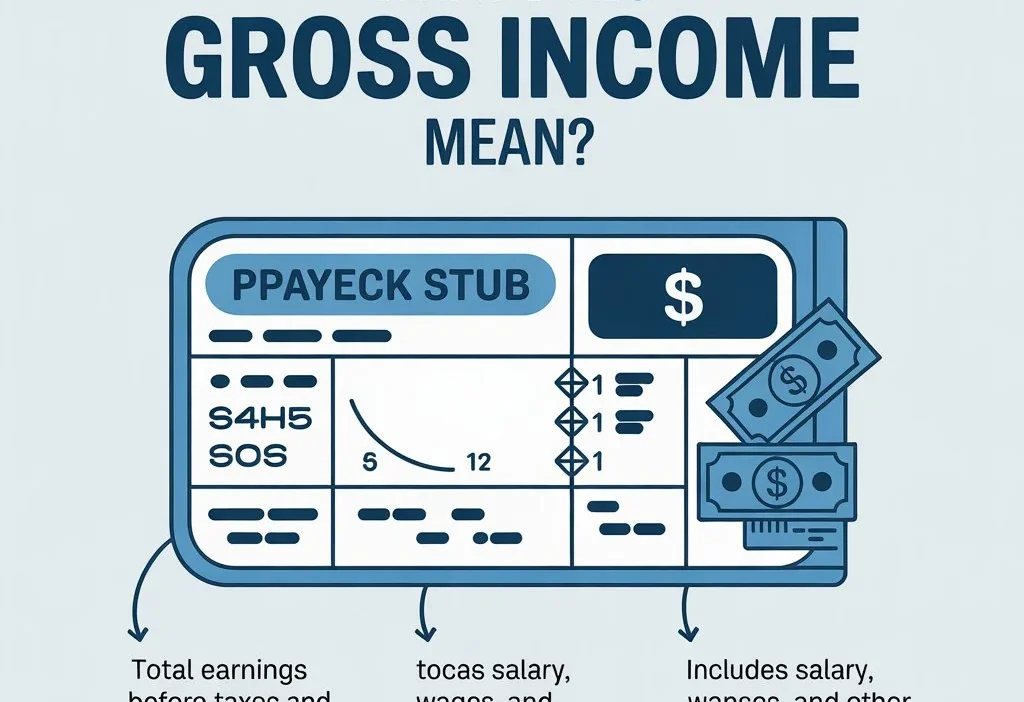
Gross income refers to the total amount of money a person or business earns before any deductions, such as taxes, retirement contributions, or other expenses.
Understanding this term helps you better manage money, plan budgets, and make informed financial decisions.
⚡ Quick Answer
Gross income is the total earnings before deductions. For individuals, it includes wages, salaries, bonuses, and other income. For businesses, it’s total revenue minus the cost of goods sold.
📚 Gross Income in Different Contexts
In Texting and Messaging
While gross income is not typically used in casual texting, people sometimes mention it when discussing salary offers, bonuses, or financial goals. For example:
- “I just got a new job offer with a gross income of $70k!”
- “Make sure your gross income covers your expenses before accepting the deal.”
In this context, it’s about money clarity and planning.
In Love and Relationships
Interestingly, gross income occasionally comes up in relationships, usually in conversations about financial compatibility. Couples may discuss:
- “Our combined gross income is enough to buy a house.”
- “We need to budget wisely based on our gross income.”
Here, it’s practical and neutral, not romantic.
In Slang and Casual Language
In slang, gross is sometimes used to mean “disgusting,” but gross income keeps its financial meaning. People jokingly might say:
- “Your gross income is insane!” (meaning very high earnings)
- “I can’t believe my gross income barely covers rent.”
Even in casual chats, the term stays related to money.
On Social Media Platforms (TikTok, Instagram, Snapchat, etc.)
Social media users, especially in career or financial advice niches, often discuss gross income:
- TikTok: “How to calculate your gross income and save money 💰”
- Instagram: “Top 5 ways to increase your gross income this year!”
- Snapchat: “Did you see my gross income from my side hustle?”
Here, it’s educational, motivational, and practical.
Spiritual or Symbolic Meaning
Gross income does not have a spiritual meaning. It is purely a financial term, so there’s no symbolic interpretation.
Numerology or Cultural Meaning
Similarly, gross income has no numerology or cultural significance. It is strictly about money, earnings, and finance.
🧠 Examples & Usage
Here are some real-life examples to help you understand:
| Context | Example Sentence | Meaning Clarified |
| Job Offer | “My gross income is $85,000 per year.” | Total earnings before deductions |
| Budgeting | “We need to calculate gross income to plan expenses.” | Helps manage finances |
| Business | “The company’s gross income increased by 15%.” | Revenue minus cost of goods sold |
| Casual Chat | “Your gross income is huge, wow!” | Refers to total earnings in a friendly way |
Context matters: In finance, it’s official and numeric, in casual chats it’s informative or surprising, but the core meaning stays consistent.
❓ Common Questions (FAQ)
1. What does gross income really mean?
Gross income is the total amount of money earned before any taxes or deductions.
2. Is gross income positive or negative?
It’s a neutral term, just showing total earnings. Positive or negative depends on financial situation.
3. Is gross income romantic?
No, it is financial, not romantic.
4. How should someone reply to gross income in conversation?
- “Wow, that’s a good earning!”
- “Thanks for sharing; let’s budget accordingly.”
5. How is gross income different from net income?
- Gross income: Earnings before deductions.
- Net income: Earnings after taxes and deductions.
🏁 Conclusion
Gross income is simply the total earnings before any deductions.
It helps individuals and businesses understand their financial standing, plan budgets, and make smart decisions.
Whether in job discussions, financial planning, or casual chats, knowing your gross income ensures clarity and confidence in money matters.
Now you can easily identify, calculate, and discuss gross income in any context.


