The word inference is trending because people keep seeing it everywhere — in school lessons, reading comprehension questions, social media explanations, psychology posts, and even relationship advice.
Students search it for exams, readers encounter it in books, and social media users hear phrases like “don’t infer the wrong thing.”
So naturally, many people are asking: what does inference mean, really? Let’s break it down in the simplest way possible.
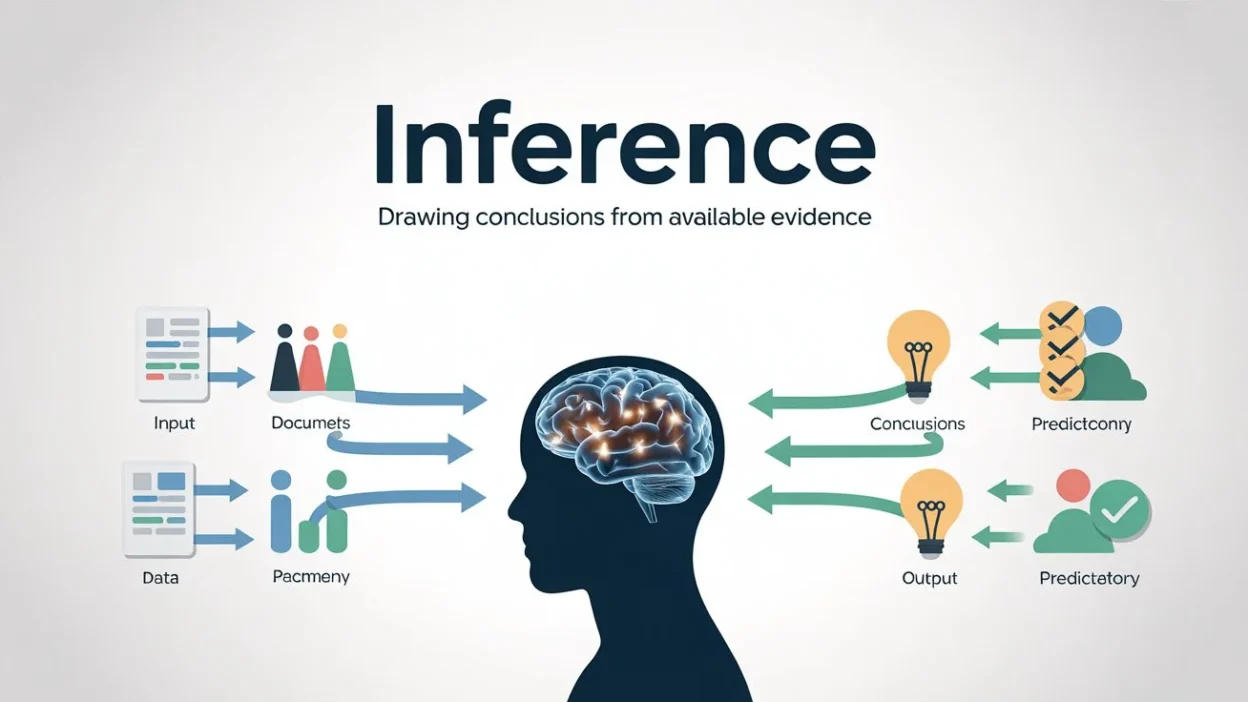
Inference means drawing a conclusion based on evidence and reasoning, not direct statements. In other words, you figure something out by reading between the lines.
⚡ Quick Answer: What Does Inference Mean?
Inference means making an educated guess or conclusion using clues, facts, or context instead of being told directly.
You infer something when you use what you see or know to understand what is implied.
📚 What Does Inference Mean in Different Contexts?
📱 In Texting and Messaging
In texting, inference happens when you understand someone’s message based on tone, emojis, timing, or wording — not just the words themselves.
Example:
- Text: “Oh… okay.”
- Inference: The person might be upset, disappointed, or not fully okay.
You’re inferring emotions that aren’t clearly stated.
❤️ In Love and Relationships
In relationships, inference plays a big role in communication — sometimes for better, sometimes for worse.
Example:
- Your partner stops replying quickly.
- You infer they’re angry or losing interest.
This may or may not be true, which shows why incorrect inferences can cause misunderstandings.
Key point: Inference is common in relationships, but it should be checked with clear communication.
🗣️ In Slang and Casual Language
In casual speech, people often use inference without realizing it.
Example:
- “She didn’t say no.”
- Inference: She might be interested.
Slang relies heavily on implied meaning, making inference a daily habit in conversations.
📲 On Social Media (TikTok, Instagram, Snapchat)
On social media, inference is everywhere because posts are short, visual, and indirect.
Example:
- A sad song with a caption: “Some things never change.”
- Inference: The person may be heartbroken or disappointed.
Followers infer emotions, situations, or messages based on visuals, captions, and trends.
🔮 Spiritual or Symbolic Meaning of Inference
Spiritually, inference is linked to intuition, awareness, and inner understanding.
Some belief systems see inference as:
- Trusting signs
- Reading symbolism
- Understanding hidden messages from life experiences
It’s about perceiving meaning beyond what’s obvious.
🌍 Numerology or Cultural Meaning (If Applicable)
In culture and education, inference represents:
- Wisdom
- Critical thinking
- Emotional intelligence
Many cultures value inference as a sign of maturity and deep understanding, especially in storytelling and traditional teachings.
🧠 Examples of Inference in Real Life
| Situation | What You Observe | Inference |
| Dark clouds | Sky looks heavy | It may rain |
| Friend is quiet | Short replies | Something is bothering them |
| Teacher repeats instructions | Emphasis | It’s important |
| Partner avoids eye contact | Behavior change | They may feel uncomfortable |
📩 Sample Text Examples Using Inference
- “I inferred from his tone that he was upset.”
- “Don’t infer anything until you hear the full story.”
- “She didn’t say it directly, but I could infer what she meant.”
👉 Context matters — the same situation can lead to different inferences depending on circumstances.
❓ Common Questions About Inference (FAQs)
What does inference really mean?
Inference means understanding something that is implied, not directly stated, by using clues, logic, or experience.
Is inference positive or negative?
Inference itself is neutral.
- It’s positive when accurate
- Negative when assumptions are wrong
Is inference romantic?
Inference can feel romantic when someone understands your feelings without being told, but it can also cause confusion if misread.
How should someone reply to inference?
The best response is clarification, such as:
- “Can you explain what you mean?”
- “I don’t want to assume — can you tell me directly?”
Clear communication reduces incorrect inferences.
🏁 Conclusion:
To put it simply, inference means figuring something out without being told directly.
It’s about using clues, context, and reasoning to understand hidden meaning.
Whether it’s in texting, relationships, school, or social media, inference helps us make sense of the world as long as we use it wisely.
You now fully understand what inference means and how it’s used in real life. ✔️


