If you’ve been watching K-dramas, listening to K-pop, or scrolling through Korean social media, you’ve probably seen the term “oppa” everywhere.
Many people wonder what it really means and why it’s so popular.
From cute fan messages to romantic text chats, this word has become a cultural phenomenon that’s trending worldwide.
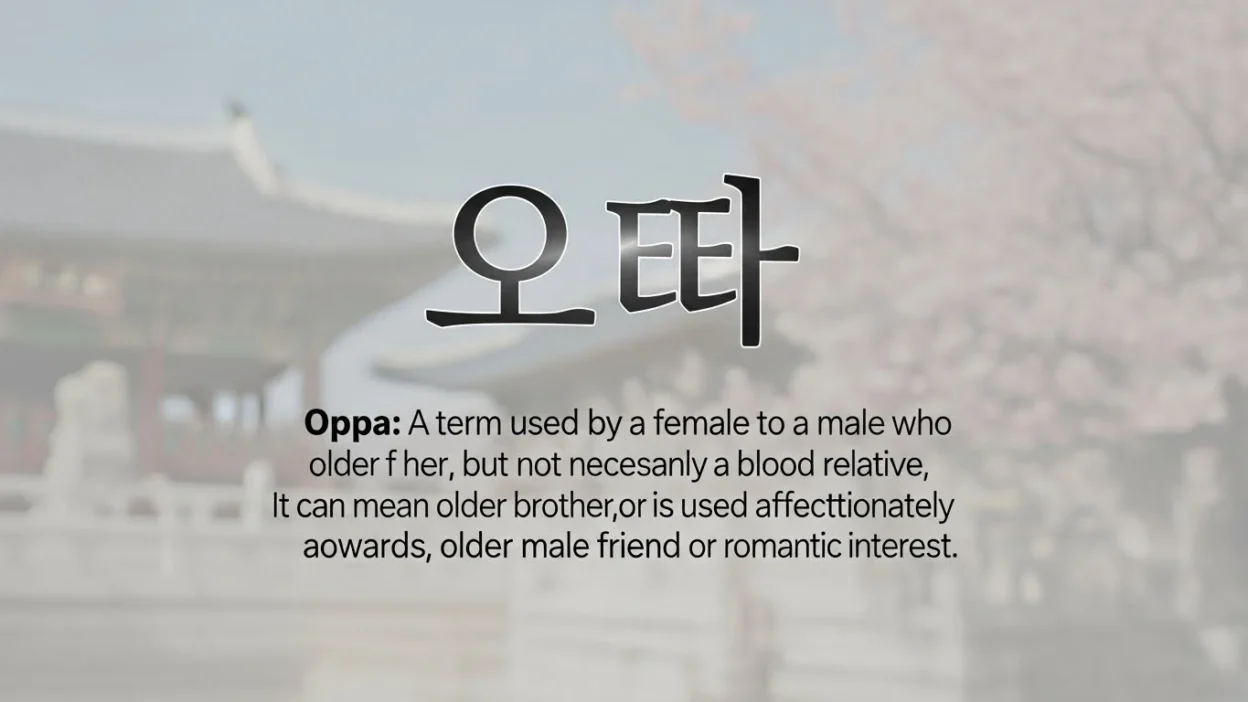
In simple terms, “oppa” (오빠) is a Korean word used by females to address an older male who is close to them, like an older brother, boyfriend, or male friend.
It carries a sense of respect, affection, and sometimes flirtation depending on the context.
⚡ Quick Answer
Oppa is a Korean term used by females to call an older male, either a brother, close friend, or romantic partner. It expresses respect, familiarity, or affection depending on the situation.
📚 Meaning of Oppa in Different Contexts
In Texting and Messaging
In text messages, “oppa” is often used casually to greet or refer to a male friend or boyfriend. It can be a cute way to start a conversation or show affection. For example:
- “Oppa, are you free tonight?”
- “Thanks, oppa! You’re the best ❤️”
In messaging, context is key—if it’s a friend, it’s friendly; if it’s a boyfriend, it can be flirty.
In Love and Relationships
In romantic relationships, “oppa” is commonly used by women to refer to their boyfriend or husband in a loving and intimate way. It carries emotional warmth and closeness.
- Example: “Oppa, I miss you 😘”
- Example: “Can you pick me up, oppa?”
Here, it’s more than just a title—it’s an expression of trust, care, and affection.
In Slang and Casual Language
Among teens and young adults, “oppa” can be used playfully, even towards male celebrities or idols. Fans may call their favorite male stars “oppa” as a sign of admiration.
- Example: “BTS Jin oppa is so handsome 😍”
- Example: “Oppa did it again with this new song!”
In slang, it’s less formal and often mixed with cute or fun expressions.
On Social Media Platforms
On platforms like TikTok, Instagram, and Snapchat, “oppa” is everywhere in captions, comments, and videos. It’s often used to react to someone attractive or charming.
- TikTok Caption: “Waiting for my oppa to text me 😏”
- Instagram Comment: “Oppa looks amazing in this outfit 🔥”
Social media has helped spread the term globally, making it part of the K-culture lexicon.
Spiritual or Symbolic Meaning
While “oppa” doesn’t have a deep spiritual meaning, it symbolizes trust, protection, and affection in Korean culture. Using the word can indicate that a female feels safe and cared for by the male she’s addressing.
Numerology or Cultural Meaning
Culturally, “oppa” reflects hierarchy and respect in Korean society. It shows that the female acknowledges the male is older or more experienced. This respect-based system is common in Korean language, which has different words depending on age and social status.
🧠 Examples & Usage
Here’s how context changes the meaning of “oppa”:
| Context | Example Text | Meaning |
| Older Brother | “Oppa, help me with homework” | Polite & familial |
| Boyfriend/Partner | “Oppa, I miss you ❤️” | Romantic & affectionate |
| Friend/Peer | “Oppa, let’s hang out!” | Casual & friendly |
| Celebrity/Fan Culture | “Kim Seokjin oppa is perfect” | Admiration & playful |
As you can see, the tone, relationship, and setting affect whether “oppa” is formal, cute, or romantic.
❓ Common Questions About Oppa
1. What does oppa really mean?
It literally means an older brother, but in modern usage, it can also refer to a boyfriend, male friend, or male celebrity.
2. Is oppa positive or negative?
It’s generally positive, conveying respect, affection, or admiration.
3. Is oppa romantic?
It can be romantic when used by a girlfriend or female admirer, but not always. Context matters.
4. How should someone reply to oppa?
A male can reply casually or affectionately depending on the relationship:
- “Yes, what’s up?” (friendly)
- “I miss you too ❤️” (romantic)
🏁 Conclusion
Oppa is more than just a word it’s a part of Korean culture that expresses respect, affection, and closeness.
Whether you’re texting a friend, talking to your boyfriend, or fangirling over a celebrity, you now know exactly what it means and how to use it.
Next time you hear “oppa,” you can understand the warmth and care behind it.


