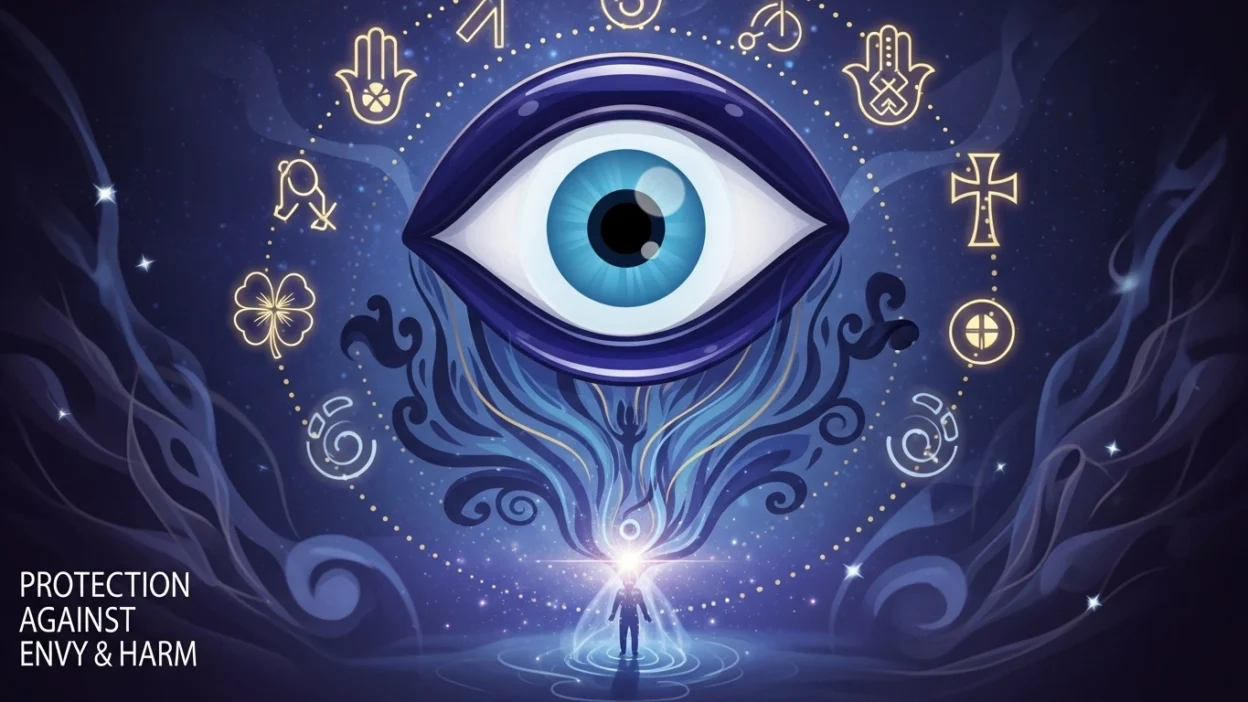
The evil eye has been a topic of fascination for centuries and is now trending online as people explore its meaning in modern culture.
Whether you’ve seen it mentioned in texts, social media posts, or fashion accessories, curiosity about the evil eye is at an all-time high.
In simple terms, the evil eye refers to a look or symbol believed to bring bad luck or misfortune to someone, often caused by envy or jealousy.
Today, the term is used in both traditional spiritual contexts and casual, digital conversations.
⚡ Quick Answer
The evil eye is a symbol or concept representing negative energy or envy directed toward someone, often unintentionally. It can also refer to protective charms or gestures used to ward off harm.
In Texting and Messaging
In texting or messaging, the evil eye emoji 👁️🗨️ or phrases like “sending you the evil eye” are often playful or sarcastic. People might use it to indicate:
- Jealousy: “You got front-row tickets? Evil eye! 😏”
- Teasing: “Oh, you finished that cake without me? 👀”
- Friendly warning: “Don’t mess with my playlist, or evil eye activated!”
Tip: Context matters—what seems negative could just be humorous among friends.
In Love and Relationships
The evil eye can take on a slightly different meaning in romantic contexts. It may imply:
- Jealousy: A partner giving a disapproving glance.
- Possessiveness: Light-hearted “protective” teasing.
- Superstitious care: Some couples use charms or bracelets featuring the evil eye to protect their love from negativity.
Example:
“Bought matching evil eye bracelets 💙 to keep our love safe from bad vibes!”
In Slang and Casual Language
In modern slang, evil eye is often used metaphorically:
- Envy or envy-related feelings: “She gave me the evil eye when I got promoted.”
- Disapproval or suspicion: “He shot me the evil eye after my comment.”
- Playful exaggeration: Friends joking about petty conflicts.
The phrase has transitioned from serious superstition to casual, everyday language online and offline.
On Social Media Platforms
On platforms like TikTok, Instagram, and Snapchat, the evil eye appears in multiple forms:
- Visual content: Videos or images with the evil eye symbol as stickers or filters.
- Hashtags: #EvilEye #ProtectYourEnergy #GoodVibesOnly.
- Captions: “Evil eye energy detected 😈” to humorously indicate jealousy or drama.
Social media has helped the evil eye trend among younger audiences, blending superstition with digital culture.
Spiritual or Symbolic Meaning
Traditionally, the evil eye is a powerful symbol in many cultures:
- Origin: Mediterranean, Middle Eastern, and South Asian regions.
- Belief: A glance or stare can unintentionally cause harm or bad luck.
- Protection: Talismans, jewelry, or charms called “nazar” are used to ward off the evil eye.
- Symbolism: Represents awareness, caution, and the power of intention.
Wearing or displaying the evil eye is considered a way to attract positive energy and repel negativity.
Numerology or Cultural Meaning
In numerology and cultural traditions, the evil eye holds significant meaning:
| Culture/Region | Belief |
| Greece & Turkey | Nazar charms protect from envy and misfortune. |
| India | Often tied to astrology and rituals to neutralize negative energy. |
| Latin America | Known as “mal de ojo,” a protective amulet is common. |
The number 7 sometimes appears in talismans related to protection, as it’s considered a lucky number.
🧠 Examples & Usage
Texting Example:
- “She got the promotion, and he’s giving her the evil eye 😒” (jealousy)
Social Media Example:
- Caption: “When your bestie outshines you 👁️🗨️ #EvilEyeVibes”
Romantic Example:
- “Bought these evil eye necklaces for us 💖 to keep bad vibes away”
Key Tip: Always consider context. In jokes, emojis soften the meaning; in serious discussions, it may imply genuine concern about negativity.
❓ Common Questions (FAQ)
What does the evil eye really mean?
It represents negative energy, envy, or misfortune, but can also refer to charms that protect against harm.
Is the evil eye positive or negative?
By itself, it is generally negative, as it indicates jealousy or ill-wishing, but protective charms turn it into a positive force.
Is the evil eye romantic?
Sometimes, yes—especially in couples using it as a symbol of care or protection.
How should someone reply to the evil eye?
Responses vary: playful emojis 😏👀, light teasing, or spiritual gestures like wearing protective charms.
🏁 Conclusion
The evil eye is a versatile concept, blending ancient superstition with modern communication.
It can signify envy, caution, or playful teasing, while also offering protection through charms and symbols.
By understanding its context—texting, social media, relationships, or spiritual use—you can confidently recognize and respond to it.
Now, you can spot the evil eye in everyday life and know exactly what it means.


